

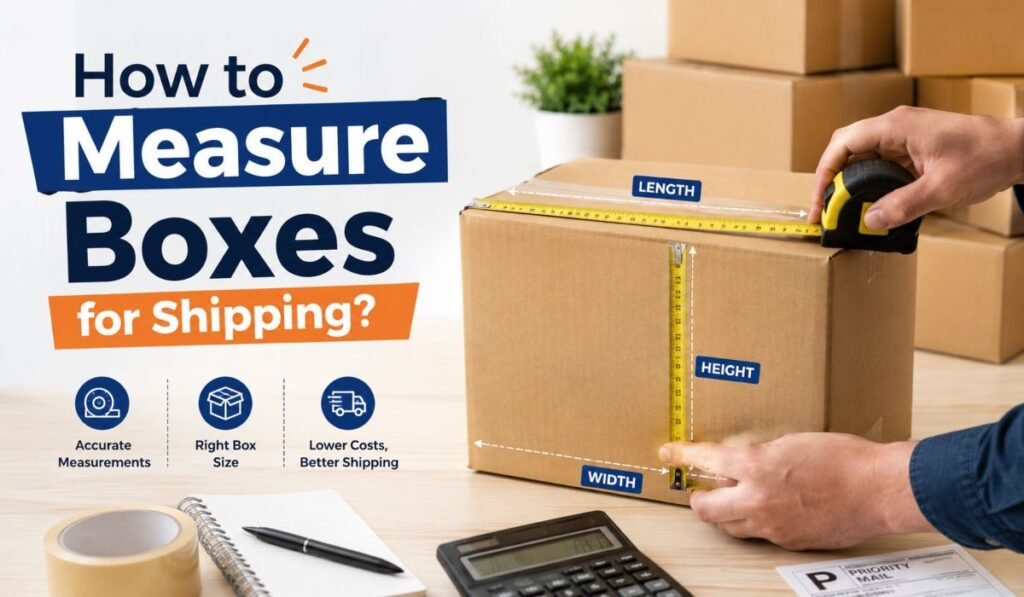
To measure boxes for shipping, measure the length, width, and height of the box using a measuring tape. Write the size in the format Length × Width × Height (L × W × H). Always use the outer dimensions of the box and round up to the nearest inch for accurate shipping rates.
Shipping products safely starts with one important step: measuring your boxes correctly. Whether you run an eCommerce store, ship handmade items, or send products to customers daily, understanding how to measure boxes for shipping can save you money, reduce delays, and protect your products during transit.
Many businesses make small measuring mistakes that lead to oversized shipping fees, damaged products, or packaging issues. Learning the right method helps improve shipping accuracy and keeps your customers satisfied.
In this detailed guide, you will learn everything about measuring shipping boxes properly, including dimensions, dimensional weight, measuring tools, common mistakes, and tips for choosing the right box size.
Why Measuring Shipping Boxes Correctly Matters
Proper box measurements affect much more than just packaging. Carriers like UPS, FedEx, DHL, and USPS calculate shipping rates based on package dimensions and weight. Incorrect measurements can increase costs significantly.
Here are some important reasons why accurate measurements matter:
- Prevents overpaying for shipping
- Reduces dimensional weight charges
- Protects products during transportation
- Improves warehouse efficiency
- Helps maintain professional packaging standards
- Prevents carrier delays and surcharges
Businesses using quality packaging solutions such as custom Packaging Boxes for Small Business often improve customer satisfaction because properly sized boxes look more professional and reduce product movement inside the package.
Understanding Shipping Box Dimensions
Before measuring a box, you need to understand the three standard dimensions used in shipping:
- Length
- Width
- Height
These dimensions are always written in the following format:
Length × Width × Height (L × W × H)
What Is Length?
Length is the longest side of the box when the opening faces upward.
What Is Width?
Width is the shorter side beside the length.
What Is Height?
Height is the vertical distance from the top to the bottom of the box.
For example:
A box measuring 12 × 10 × 8 inches means:
- Length = 12 inches
- Width = 10 inches
- Height = 8 inches
Tools Needed to Measure Shipping Boxes
You do not need expensive equipment to measure shipping boxes accurately. Most businesses use simple tools like:
- Measuring tape
- Ruler
- Yardstick
- Digital measuring device
- Shipping scale
Flexible measuring tapes are often best because they make it easier to measure larger boxes accurately.
Step-by-Step Guide on How to Measure Boxes for Shipping
Step 1: Place the Box on a Flat Surface
Put the box on a stable and flat table or floor. Ensure the box is fully assembled and sealed as it would appear during shipping.
Step 2: Measure the Length
Identify the longest side of the box. Use your measuring tape from one edge to the other.
Record the measurement in inches because most American shipping carriers use inches.
Step 3: Measure the Width
Measure the shorter side next to the length.
Again, record the measurement carefully.
Step 4: Measure the Height
Measure from the bottom of the box to the top.
Do not compress the box while measuring because this can create inaccurate dimensions.
Step 5: Write Measurements Correctly
Always record dimensions in this order:
Length × Width × Height
Example:
16 × 12 × 10 inches
How Shipping Carriers Use Box Measurements
Most shipping companies calculate costs using:
- Actual weight
- Dimensional weight
Whichever is higher usually determines your shipping rate.
What Is Dimensional Weight?
Dimensional weight, also called DIM weight, is a pricing method based on package volume instead of actual weight.
Large lightweight packages often cost more because they occupy more carrier space.
Dimensional Weight Formula
Most major carriers use a DIM divisor such as 139 or 166.
The basic formula is:
DIM Weight Formula:
For example, if your box measures 20 × 14 × 10 inches:
This means the shipping carrier will use 20.1 lbs as the billable weight for this package.
The carrier may round this to 21 lbs. for billing purposes.
This is why using oversized boxes can increase shipping costs even if the product itself is lightweight.
Inside Dimensions vs Outside Dimensions
This is an important concept that many businesses overlook.
Inside Dimensions
Inside dimensions measure the usable internal space of the box.
Manufacturers typically list box sizes using inside dimensions.
Outside Dimensions
Outside dimensions include the thickness of the cardboard.
Shipping carriers usually care about outside dimensions because they calculate transportation space requirements.
Always confirm whether your supplier lists inside or outside dimensions before ordering packaging.
Measuring Irregularly Shaped Boxes
Not all shipments use perfect rectangular boxes.
For unusual packages:
- Measure the longest point as length
- Measure the widest point as width
- Measure the tallest point as height
Always round up to the nearest whole inch because carriers generally do the same.
How to Measure Boxes for International Shipping
International shipments often require greater accuracy because customs forms, carrier restrictions, and dimensional charges may vary by country.
When shipping internationally:
- Use strong corrugated boxes
- Double-check dimensions
- Include accurate weight
- Verify country-specific limits
Many global brands use Custom Kraft Boxes with Logo because they provide durability while improving branding during international deliveries.
Common Mistakes When Measuring Shipping Boxes
Measuring the Wrong Side
Some people confuse width and height. Always identify the longest side first.
Measuring Before Assembly
Flat boxes should never be measured before assembly because folded dimensions are inaccurate.
Ignoring Bulges
If the box bulges after packing, measure from the widest outward points.
Forgetting Packaging Materials
Bubble wrap, foam, and inserts may change final dimensions.
Using Fractional Measurements Incorrectly
Most carriers round up to the nearest inch. Even a slight difference can impact shipping fees.
Best Box Sizes for Different Products
Choosing the right box size is just as important as measuring accurately.
Small Products
Ideal for:
- Jewelry
- Cosmetics
- Accessories
- Soap products
Brands using custom printed soap boxes often choose compact packaging to minimize movement and lower shipping costs.
Medium Products
Ideal for:
- Clothing
- Electronics
- Books
- Kitchen items
Large Products
Ideal for:
- Appliances
- Bulk orders
- Home décor
- Industrial equipment
How to Reduce Shipping Costs with Better Measurements
Use Right-Sized Packaging
Avoid oversized boxes whenever possible.
Minimize Empty Space
Excess space requires additional filler materials and increases dimensional weight.
Standardize Box Sizes
Using standard box dimensions improves efficiency in packing operations.
Invest in Packaging Audits
Regular reviews help identify unnecessary shipping expenses.
Reliance Packagings often help businesses optimize packaging efficiency by selecting suitable box dimensions for various shipping needs.
Understanding Box Strength and Material
Measurements alone are not enough. The box material also matters.
Single-Wall Corrugated Boxes
Suitable for lightweight products.
Double-Wall Corrugated Boxes
Better for heavy or fragile shipments.
Triple-Wall Corrugated Boxes
Used for industrial or extremely heavy products.
Always match box strength with product weight and shipping distance.
Shipping Box Measurement Tips for eCommerce Businesses
eCommerce stores process large numbers of shipments daily, so measurement accuracy becomes critical.
Create a Packaging Chart
Maintain a chart listing:
- Product dimensions
- Recommended box sizes
- Packaging materials
- Carrier restrictions
Automate Measurements
High-volume businesses may use automated dimensioning systems.
Train Packing Staff
Proper staff training reduces packaging mistakes and shipping errors.
How Packaging Affects Customer Experience
Customers notice packaging quality immediately after delivery.
Properly measured boxes provide:
- Better product protection
- Cleaner presentation
- Easier unboxing
- Reduced damage claims
Poorly sized boxes can create negative impressions and increase return requests.
Eco-Friendly Shipping Through Better Measurements
Sustainable shipping practices are becoming increasingly important.
Accurate box measurements help reduce:
- Excess cardboard waste
- Plastic filler use
- Transportation emissions
- Storage space requirements
Smaller, optimized packaging supports environmentally responsible shipping practices.
USPS, UPS, and FedEx Measurement Guidelines
USPS
USPS often favors smaller packages and has strict size limits for certain services.
UPS
UPS heavily considers dimensional weight for larger packages.
FedEx
FedEx uses dimensional pricing for most commercial shipments.
Always review carrier guidelines before shipping oversized packages.
Tips for Measuring Boxes Quickly in Warehouses
For warehouse operations:
- Use measuring stations
- Keep digital scales nearby
- Label standard box sizes clearly
- Train teams on dimension order
- Use barcode systems for inventory
Efficiency improves significantly when measurement processes are standardized.
When to Use Custom Shipping Boxes
Custom packaging becomes valuable when:
- Products have unusual dimensions
- Branding matters
- You want lower shipping costs
- Fragile items require extra support
Custom boxes reduce wasted space while improving packaging presentation.
Final Thoughts
Learning how to measure boxes for shipping is an essential skill for businesses and individuals alike. Accurate measurements help control shipping expenses, improve packaging efficiency, and ensure products arrive safely.
By understanding length, width, and height properly, avoiding common measuring mistakes, and selecting the correct box sizes, you can streamline your shipping process and improve customer satisfaction.
Whether you ship a few products weekly or manage thousands of orders daily, proper box measurement practices can make a significant difference in operational costs and delivery performance.
Frequently Asked Questions
Do shipping companies use inside or outside box dimensions?
Shipping carriers usually use outside dimensions because they calculate how much space the package occupies during transportation.
What is dimensional weight in shipping?
Dimensional weight is a pricing method based on package volume rather than actual weight. Larger lightweight boxes may cost more to ship.
Should shipping box measurements be rounded up?
Yes, most carriers round dimensions up to the nearest whole inch, so it is best to do the same when measuring packages.
Why is accurate box measurement important?
Accurate measurements help reduce shipping costs, avoid carrier surcharges, improve product protection, and enhance packaging efficiency.
Leave a Reply